- Home
-
Products
Turn-key Project
- Battery Slurry Production Equipment
- Liquid Complete Production Line
- Adhesive Complete Production Line
- Powder Complete Production Line
- Liquid Storage and Automatic Batching System
- Powder Storage and Automatic Batching System
- EPC Project General Contracting Business
- Water-based Paint Production Line
- Putty Complete Production Line
- System Integration
- Application Industries
- News
- Service
- About Us
- Contact Us







-
- High Viscosity Mixers
- Dispersers&Mills
- High Shear Emulsifiers
- Grinding Machines
- Vacuum Drying Mixers
- Powder Blenders
- Extrusion Machine
- Washing Machine
- Powder Procedure Processing
- Filling And Packing
- Filters And Sieves
- Kettles/Vessels/Tanks/ Hoppers
- Laboratory Equipment
- Batching And Metering
- Turn-key Project
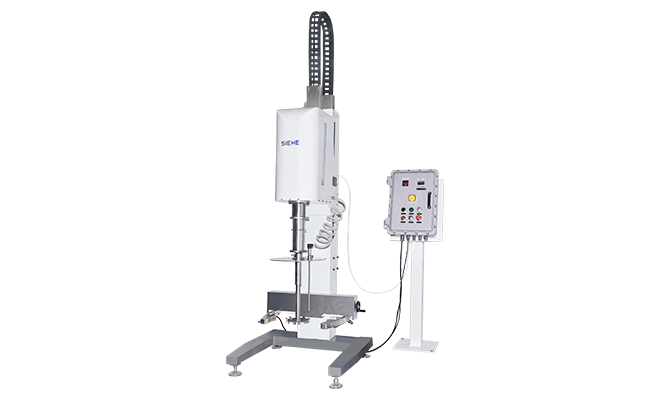
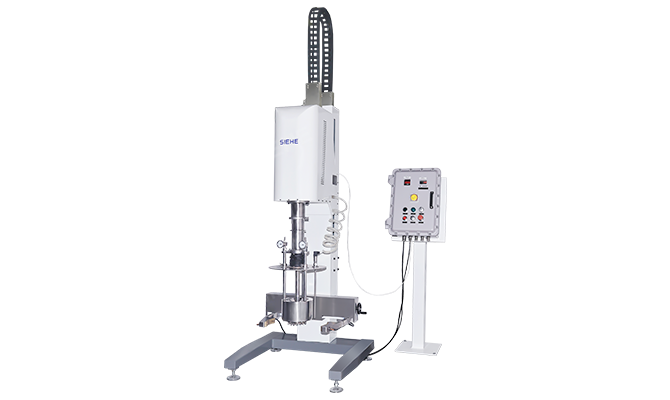
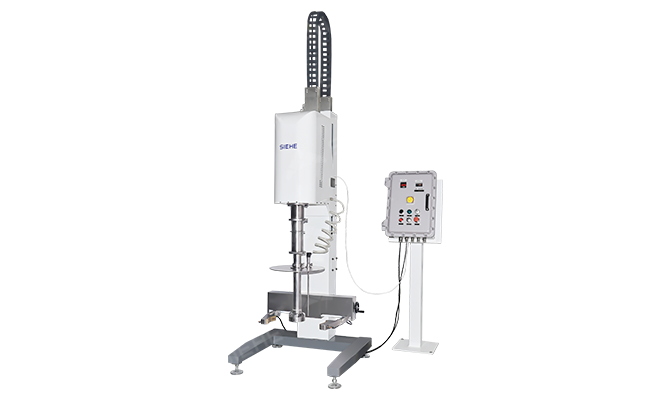
Pilot Multi-functional Machine
The pilot multi-functional pilot-scale integrated machine, developed by the SIEHE Group, is a comprehensive pilot-scale process machine integrating multiple process functions for the pilot production stage. It is widely used in industries such as coatings, inks, adhesives, battery slurries, and nanomaterials. The overall structural design and manufacturing standards of the equipment fully align with advanced European technologies. Adopting a "one machine, multiple modules" design concept, it allows for rapid switching between different process components such as dispersion, grinding, emulsification, and mixing, enabling multiple process verification to be completed on the same machine. This significantly reduces repetitive equipment investment and time losses during material transfer, effectively improving R&D efficiency and process flexibility. The machine features a compact layout and small footprint, balancing ease of operation and space adaptability in experimental environments. It helps users significantly shorten experimental cycles, reduce process scale-up risks, and provide a stable and reliable process verification platform for product industrialization.
Product Overview
Material Viscosity: ≤50,000 cps
Production Capacity: 20-100L
Application Areas: Suitable for dispersion, grinding, mixing, homogenization, and emulsification of materials in industries such as biology, pharmaceuticals, food, coatings, inks, adhesives, dyes, and pesticides.
Applicable Materials: Various non-flammable and non-explosive slurries with a viscosity below 50,000 cps and a solid content below 80%; such as latex paints, industrial paints, water-based inks, and over a thousand other materials.
Product Advantages
-
Modular Design, Multi-Process Expansion
The equipment is equipped with a unified drive and control system platform. By quickly replacing different functional modules such as dispersing, grinding, mixing, and emulsifying, multiple processes such as high-speed dispersing, wet grinding, high-viscosity mixing, and high-shear emulsifying can be achieved on the same main unit. Materials do not need to be transferred between different devices, effectively reducing cleaning frequency and the risk of cross-contamination. It also reduces the cost of multi-device configuration and maintenance, significantly improving process flexibility and equipment utilization in the R&D and pilot-scale stages.
-
Quick-Clamp Connection, Efficient and Convenient Assembly and Disassembly
The functional modules and the main shaft adopt a quick-clamp connection structure, allowing for rapid disassembly and replacement of working components such as dispersing, grinding, and mixing without auxiliary tools. This meets the needs of different process switching, and is especially suitable for formula development and multi-group comparative experiments, effectively improving experimental efficiency. The main unit and key components are precision manufactured using CNC machining centers and CNC lathes, ensuring high precision, stable operation, and long service life.
-
Seamless Scale-up from Experiment to Production
The equipment effectively bridges the gap between laboratory R&D and large-scale production. By maintaining consistent process logic and operating parameters with production equipment, it achieves multiple goals, including replicable process parameters, more stable formula scale-up, significantly shortened pilot-scale cycle, and effectively reduced scale-up risks. Users can quickly complete the entire process transformation from experimental verification and small-batch trial production to industrial production, ensuring consistent product quality at different scales.
-
Electric Lifting System, Stable and Reliable Operation
The equipment adopts an imported European servo control lifting system, supporting digital display and precise control of lifting height. The operating position can be freely set according to process requirements. The equipment lifts smoothly and positions accurately, meeting the stable operation requirements under different liquid levels and working conditions. The machine body adopts an industrial integrated structure design, with an aluminum alloy shell, facilitating cleaning and maintenance, ensuring a long service life, and meeting laboratory cleanliness requirements.
-
Intelligent Digital Control System
The equipment is equipped with an HMI human-machine interface and a PLC intelligent control system, realizing centralized digital control of functions such as start-up, speed adjustment, lifting, and time setting. The system displays operating parameters in real time, making operation more intuitive and efficient. It also features operating parameter storage, data recording, and safety interlock protection functions, which can effectively improve equipment operation safety and process control accuracy, and provide reliable support for experimental data management and process optimization.
Technical Parameter
| Work mode | Power Supply | Motor Power (kw) | Speed (rpm) | Working components | Capacity (L) | Lifting Method |
| Dispersing | 380V 50Hz | 3-5.5 | 200-2100 | Dispersion disc diameter:50-200mm | ≤100 | Electric lifting |
| Grinding | 380V 50Hz | 3-5.5 | 200-2100 | Basket grinding assembly, with jacket | ≤100 | Electric lifting |
| Emulsifying | 380V 50Hz | 3-5.5 | 200-2100 | Rotor-stator diameter 50-180mm | ≤100 | Electric lifting |
| Mixing | 380V 50Hz | 3-5.5 | 200-2100 | Butterfly agitator diameter 50-200mm | ≤100 | Electric lifting |
Working Principle
Dispersing: During operation, the high-speed rotation of the dispersing disc drives the material to form a strong annular flow, generating a strong vortex inside the container. The material spirals downwards along the vortex trajectory. In this high-speed flow field, particles are continuously subjected to intense shearing, collision, and friction, achieving rapid dispersion, dissolution, and uniform mixing.
Grinding: The motor drives the lever and the bottom dispersing disc to rotate at high speed, creating a negative pressure zone in the upper part of the dispersing disc and inside the basket grinding chamber, continuously drawing the slurry into the grinding chamber. The lever drives the grinding media to generate intense and disordered multi-directional motion inside the chamber, subjecting the material particles to continuous intense collision, shearing, and friction, thus reducing the particle size and narrowing the particle size range. Simultaneously, the high-speed rotation of the dispersing disc generates a strong vortex, drawing the ground material out of the chamber and recirculating it back to the feed, significantly improving the uniformity of material fineness and dispersion efficiency.
Emulsifying: Due to the extremely high linear velocity and strong kinetic energy generated by the high-speed rotation of the rotor, the material is subjected to intense mechanical and hydraulic shearing, centrifugal extrusion, liquid layer friction, impact tearing, and turbulence within the narrow gap between the rotor and stator. This results in the instantaneous, uniform, and fine dispersion and emulsification of immiscible solid, liquid, and gaseous phases under the combined action of appropriate mature processes and suitable additives. Through high-frequency repetition, a high-quality product with more uniform particle size distribution and higher stability is ultimately formed.
Mixing: The motor drives the butterfly agitator to rotate at high speed. The blades create stable axial and radial circulation within the container, causing overall material tumbling and convection circulation, significantly improving dispersion efficiency. During agitation, the material is continuously subjected to pushing, shearing, and folding actions, enabling rapid powder-liquid mixing, additive dispersion, and system homogenization, avoiding localized sedimentation and mixing dead zones. Meanwhile, the disc-shaped structure effectively drives the material to move up and down, balancing stirring torque and operational stability, making it particularly suitable for the uniform mixing of medium- to high-viscosity materials. It can be equipped with a vacuum lid and vacuum pump to achieve vacuum mixing functionality.
Contact Information
Leave Us a Message
Please kindly fill out the following form if any question or for more information, we will reply you as soon as possible.